
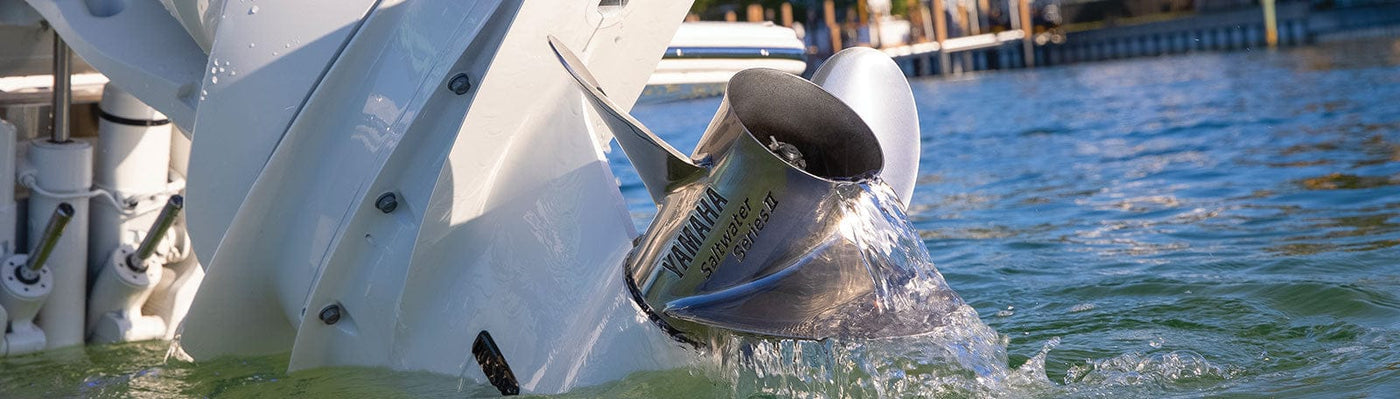

How to Use This Suzuki Propeller Chart
Find your Suzuki outboard model in the table below. It's stamped on the engine's ID plate as "DF" followed by the horsepower and a letter code. Match it to the right row, then pick aluminum or stainless steel based on how you actually use the boat. Each row links straight to the product.
Suzuki Propeller Fitment Chart by Engine Model
| Engine Model(s) | HP Range | Material | Shop |
|---|---|---|---|
| DF4 / DF6 | 4–6 HP | Aluminum | Suzuki Genuine Propeller DF4/6 |
| DF9.9B / DF15A / DF20A | 9.9–20 HP | Aluminum | Suzuki Genuine Propeller DF9.9/15/20 |
| DF25A / DF30A | 25–30 HP | Aluminum | Suzuki Genuine Propeller DF25A/30A |
| DF60 / DF70 (1998–2009) | 60–70 HP (legacy) | Aluminum | Suzuki Genuine Propeller DF60/70 ('98-'09) |
| DF40A / DF50A / DF60A | 40–60 HP | Aluminum | Suzuki Aluminum Propeller DF40A/50A/60A |
| DF40A / DF50A / DF60A | 40–60 HP | Stainless Steel | Suzuki Stainless Steel Propeller DF40A/50A/60A |
| DF50AV / DF60AV / DF75 / DF90 / DF115 / DF140 | 50–140 HP | Aluminum | Suzuki Aluminum Propeller DF50AV/60AV/75/90/115/140 |
| DF50AV / DF60AV / DF75 / DF90 / DF115 / DF140 | 50–140 HP | Stainless Steel | Suzuki Stainless Steel Propeller DF50AV/60AV/75/90/115/140 |
| DF150 / DF175 / DF200 / DF225 / DF250 / DF300 | 150–300 HP | WaterGrip (Stainless Steel) | Suzuki WaterGrip Propeller DF150-DF300 |
How Do I Know What Propeller I Need?
Match Your Engine Model First
Your engine model comes first. It determines which propellers will physically bolt onto your gear case, since spline count, hub size, and mounting hardware are all model-specific. Start with the chart above.
Choose Your Material
Aluminum is the standard OEM choice: lighter, cheaper, and built to flex on impact. Stainless steel is stiffer, holds its shape at high RPM, and delivers better acceleration and top speed, worth it for higher horsepower or performance use.
Diameter and Pitch
Diameter is the width the blades sweep. Pitch is how far the propeller moves forward per rotation. Lower pitch suits heavier boats; higher pitch favors top speed. Over-revving? Go up in pitch. Under-revving? Go down.
3-Blade vs. 4-Blade Propellers: Which Is Faster?
-

3-Blade
A 3-blade propeller is usually faster at top speed since it creates less drag in the water. It's the standard choice for most recreational boats, especially lighter hulls that don't need extra holeshot to get moving quickly.
-

4-Blade
A 4-blade trades a bit of that top speed for stronger acceleration and a more stable ride at cruising speed. If you're carrying heavier loads or need to get on plane fast, the 4-blade is usually the better trade.


The Suzuki WaterGrip Propeller Line
The Suzuki WaterGrip Propeller is Suzuki's genuine stainless steel line for high-horsepower outboards (DF150–DF300). It's built around Suzuki's own gear case geometry instead of a generic aftermarket fit, which cuts down on cavitation and improves handling compared to a standard aluminum prop. It comes in 3-blade and 4-blade versions, and in standard or counter-rotation for twin-engine setups.
Frequently Asked Questions
What does "DF" mean on a Suzuki outboard?
What does "DF" mean on a Suzuki outboard?
"DF" identifies Suzuki's four-stroke outboard line. It shows up in front of the horsepower number on every modern Suzuki outboard. DF115, for example, is a 115 HP four-stroke.
Are Mercury and Suzuki propellers interchangeable?
Are Mercury and Suzuki propellers interchangeable?
No, not directly. Every outboard brand uses its own spline count, hub design, and gear case dimensions, so a Suzuki propeller generally won't bolt onto a Mercury without an adapter kit. Match your propeller to your engine's brand and model, not just the horsepower.
How do I know if my propeller needs to be replaced?
How do I know if my propeller needs to be replaced?
Look for bent or chipped blades, pitting on the surface, or any wobble when it spins. Even a small dent can cause vibration, waste fuel, and put extra strain on your lower unit, more than most boaters expect.